A Winter Shelf Edit for a Softer Room
A winter shelf edit can soften a room without new purchases: learn to vary object height, leave breathing space and group familiar textures with care.
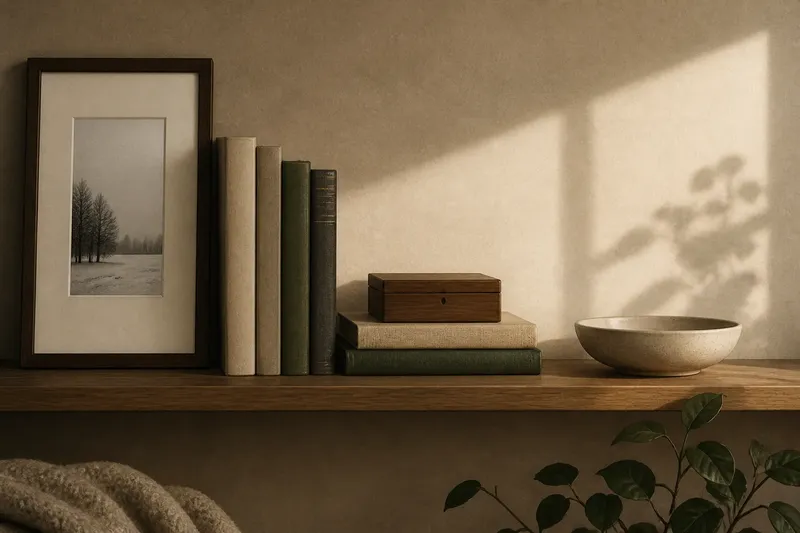
A stack of paperbacks, a ceramic bowl and a framed photograph can look oddly busy on a shelf once winter light turns low and the room feels more enclosed. A winter shelf edit can soften that view without adding anything new. The useful shift is not to decorate more, but to give a few familiar objects room to register.
Think of the shelf as a small composition that can change with the season. A lower, quieter arrangement often feels settled because the eye can move between objects without meeting a solid wall of detail. You can reach that effect by adjusting height, spacing and texture in that order, then stopping before the shelf becomes a display of every favorite thing.
Start by choosing what the shelf should hold
Before moving objects, decide what the shelf is for. It might hold books you reach for, a few personal keepsakes, or pieces that make a blank wall feel connected to the rest of the room. That purpose gives you a reason to keep some things visible and put others away for now.
Take everything off the shelf and set it on a nearby table or the floor. Wipe the surface, then sort the objects into three simple groups: useful, personally meaningful and visually helpful. One item may fit more than one group, which is a good sign that it earns its place. A souvenir you enjoy but rarely notice can return later if the arrangement has room; it does not have to be discarded.
Keep the shelf’s everyday job in view. If it supports frequently used books, leave those books easy to reach. If a speaker, lamp or charging station belongs there, treat it as part of the arrangement rather than trying to hide its function. A winter edit should make the shelf feel more composed, not harder to use.
Build a gentle rhythm with object height
Height gives the eye a path across a shelf. When every object rises to the same level, the arrangement can read as a stiff line. When tall pieces crowd one end and small pieces scatter across the rest, it can feel lopsided. Aim for a gradual change in height, with pauses where the shelf needs visual rest.
Start with one taller object, such as a framed photo, a narrow vase or a standing book. Place it toward one side rather than directly in the middle. Add a medium-height piece nearby, then a lower object such as a shallow bowl or a short stack of books. Leave some open shelf between groups so the change in height remains visible.
Books can alter height without requiring a new object. A few can stand upright, while another small group lies flat to make a low platform for a light object. Keep the stack stable and avoid placing anything fragile where it could be knocked during ordinary use. If the shelf holds a lamp or another item that needs clear access, preserve its space.
Imagine you have a tall framed photograph, a few novels, a small wooden box and a ceramic bowl. Place the photograph at the left, stand the novels beside it, then set the box on a short horizontal book stack farther along. Put the bowl near the other end and leave a clear patch between it and the books. The expected result is a loose rise-and-fall rhythm, not a row of objects at matching heights.
Use breathing space as part of the arrangement
Open shelf is not unfinished shelf. It separates objects so their outlines are easy to read, and it gives the wall behind them a visible role. In winter, when blankets, heavier fabrics and warm lamps may already add visual weight to a room, that blank area can keep a shelf from feeling dense.
Look at the gaps between objects as carefully as the objects themselves. If two pieces nearly touch, either bring them together deliberately or move them farther apart. An uncertain sliver of space can make a display feel accidental. A clear gap signals that the objects belong to separate groups or that one item is meant to stand alone.
Leave some of the shelf’s length visibly empty, especially beside a detailed object or a cluster of books. The open area does not need to be identical from one shelf to another. A narrow shelf may need only a modest pause, while a long shelf can support a more generous stretch of bare surface. The point is to let the objects breathe, not to meet a rigid spacing formula.
If the shelf is shallow, check that objects do not jut into the room or crowd one another front to back. A single bowl placed near the front can make the surface feel occupied even when the shelf is otherwise sparse. Move it back or remove one nearby piece if the arrangement feels compressed.
Group a few textures without adding visual noise
Texture brings warmth, but too many materials competing at once can make a small shelf look fussy. Use what is already in the room: the grain of a wooden box, the matte surface of pottery, the soft edge of a cloth-bound book or the smooth face of glass. A few distinct textures are easier to notice when the objects around them are simple.
Group pieces by how they feel to the eye, not only by their color. A ceramic bowl beside a wooden object can make both surfaces more apparent. A fabric-covered book among glossy or reflective pieces may provide a soft interruption. If every item has a strong pattern, shine or rough finish, remove one and see whether the remaining pieces become easier to read.
Keep small groupings compact. Two or three objects can form a readable cluster when they share a visual link, such as material, shape or personal meaning. The link need not be an exact match. A pair of handmade pieces may sit together because their surfaces feel related, while a nearby framed photo gives the shelf a different note.
Do not add a seasonal ornament simply because the edit is for winter. A wool textile from another room, a pinecone already collected or a darker ceramic piece may provide a seasonal cue if it suits the shelf. If an object feels out of place, the room does not need to accommodate it.
Make a winter shelf edit that still feels like home
A seasonal arrangement should remain personal. The shelf may look softer with fewer objects, but an overly polished display can lose the small signs of everyday life that make it yours. Keep the pieces you genuinely enjoy seeing, and let the edit change how they relate to one another.
Use this short sequence when you put the objects back:
- Return essential items first, leaving enough access to use them comfortably.
- Place one taller object to establish a point of focus.
- Add a small book group or a medium-height piece to create a gradual change in height.
- Bring in one or two contrasting textures from objects already in the room.
- Leave a clear patch of shelf between groups, then remove any piece that makes that pause disappear.
- Step back from the usual viewing position and adjust only what looks crowded, isolated or hard to reach.
Change the view from the doorway as well as from the sofa or chair where you usually sit. A shelf can look balanced up close but form a dark, busy block from across the room. If that happens, spread the groups apart or take away one small object rather than filling an empty patch automatically.
What should you adjust when the shelf still feels crowded?
Should every shelf hold the same number of objects?
No. Shelf depth, length and the objects’ shapes all affect how much can sit comfortably in view. Let the available space and the shelf’s everyday use guide the edit rather than matching a count across the whole unit.
Can books stay in the arrangement?
Yes. Books provide useful height and make the display feel connected to daily life. Keep frequently used titles accessible, and use a short stack or a small upright group only where it leaves the shelf easy to use.
What if one meaningful object has an awkward shape?
Give it room to stand alone instead of trying to disguise its outline with more pieces. If it still makes the shelf feel crowded, place it somewhere else in the room where its shape can be seen clearly.
How often should a winter shelf edit change?
Change it when the arrangement stops serving the room or when you want a different set of familiar objects in view. There is no need to refresh it on a fixed schedule; a small adjustment can be enough.
Stop when the shelf feels clear and usable
Once the shelf has a visible rhythm, distinct groups and a few open spaces, leave it alone for a while. That pause helps you notice whether anything is genuinely missing or whether the empty surface is doing useful work. Resist filling it just because there is room.
A winter shelf edit is most successful when it makes ordinary objects easier to see and live with. Keep the books you reach for, the pieces that matter and the textures that suit the room. When the arrangement feels calm from the places you actually sit, the edit is finished for now.