The Side Table: From Useful Stand to Room Accent
Choose a side table that solves a daily seating-room problem, keeps essentials within reach, and gives the corner a clear, considered purpose.
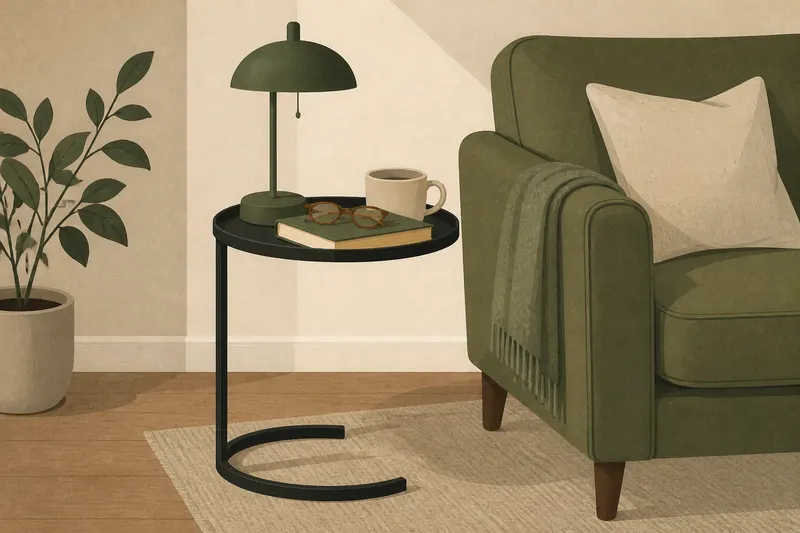
A mug has nowhere to land beside the sofa, so it spends the evening on the floor. A side table can fix that small problem, but its usefulness depends on what you need within reach and how you move through the room. Start with the task, then choose a table that supports it without making the corner harder to use.
Choose a side table for the task you repeat
Notice what you reach for while seated: a drink, reading glasses, a book, a lamp switch, or a place to set a phone. The answer helps determine whether you need an open top, a drawer, a shelf, or a table that can tuck close to the seat.
Think about the task at the moment it happens. A drink needs a level, reachable surface. A phone may need a charging cable nearby. Glasses need a place you can find without shifting a lamp or moving a stack of books. Give the most frequent task priority, rather than expecting one small table to handle every household need.
- Check what you set down: If the usual items fit on the intended top with room to place them easily, choose that surface; if they would crowd it, look for a larger top or a separate storage spot.
- Check whether small items go missing: If remotes or glasses need to be put away between uses, choose a table with a drawer or shelf; if you use them constantly, keep the top open and accessible.
- Check whether you need a lamp: If a lamp belongs beside the seat, allow space for its base and switch; if it does not, avoid giving up usable surface to a decorative lamp.
- Check how you approach the seat: If a table would narrow the route, choose a slimmer design or place the surface elsewhere; if the route stays clear, the location may work.
- Check whether the table will move: If you need to pull it close for different activities, choose a design that is easy to reposition; if it will stay put, prioritize a stable base.
- Check the likely spills and marks: If drinks or daily handling are part of the routine, choose a finish that is straightforward to wipe; if the table is mainly for display, a more delicate surface may suit its role.
Write the main job in a few words before you shop. “Hold a reading lamp” is a clearer brief than “finish the corner.”
Match the table’s access to the seat
A table should be close enough to use without leaning awkwardly, but not so close that it catches a sleeve or blocks a path. Check the space beside the arm and the way people enter and leave the seat. A round top can make a tight passage feel easier to move through because it has no corners; a rectangular top can use the length beside a sofa more directly.
Consider the base as well as the top. A pedestal leaves more floor visible, while a broad or enclosed base takes up more visual and physical space. A C-shaped table can slide partly beneath some sofas or chairs, but check that its base fits and that you can still sit comfortably. A narrow table may be more useful than a larger one if it preserves access.
Imagine you read in a deep armchair and keep setting your glasses on the floor. You identify the glasses as the main task, choose a slim table with an open top, and check that its base does not interfere with the chair or your route past it. The expected result is a reachable place for the glasses without turning the approach to the chair into an obstacle.
Use storage only when it supports the routine
A drawer can keep small items out of sight, but it is less useful if you need to open it every time you sit down. A lower shelf can hold a book or basket while leaving the top clear. An open table keeps daily objects visible and easy to reach, though it can collect clutter if there is no plan for what belongs there.
Decide what should live on the table and what should be put away. For instance, a lamp and the book currently in use may stay on top; spare cables and old mail may belong elsewhere. If the storage compartment becomes a catchall, remove items that do not serve the seat’s routine.
Let the table support a lamp or chosen object
When a lamp is the main reason for the table, consider the lamp and its base together. The table needs a stable surface, room for the lamp’s switch, and enough open space for anything else you use there. If the lamp leaves no practical landing area, choose a smaller fixture or give the table a different job.
For a display surface, choose a small number of objects you genuinely want to see. A framed photograph, a bowl, or a vase can give the table a clear purpose without covering the top. Keep frequently used items accessible rather than treating the whole surface as a display shelf.
Which side table fits your seating routine?
What works beside a sofa with little floor space?
Consider a compact C-shaped table or a narrow pedestal, then check that its base and top fit the spot without blocking the route. If neither works comfortably, use a nearby shelf or another existing surface instead.
What should you choose when you already have enough surfaces?
Choose a table only if it serves a distinct task, such as holding a lamp or keeping a book beside a particular seat. If there is no clear task, leave the floor open rather than adding another place for objects to accumulate.
Can a side table provide storage and remain easy to use?
Yes, if the storage suits what you need to put away and the top remains accessible. If you reach for the stored items often, an open shelf or clear top may work better than a drawer.
How do you decide whether a table needs a durable finish?
Consider what will happen on its surface during ordinary use. If drinks, snacks, or frequent handling are part of the routine, choose a finish that is easy to wipe; if the table is mainly decorative, appearance may matter more than quick cleanup.
Check the choice in the room before you commit
Say you have an armchair, a lamp that needs a nearby switch, and a narrow route between the chair and the doorway. You first decide that reaching the lamp and setting down a book are the table’s jobs. You then rule out a broad cabinet-style table because it would narrow the route, and consider a slim open table instead. You check that the lamp base fits while leaving a clear place for the book, and that the switch remains reachable from the chair. If those checks pass, the table supports both tasks; if they do not, move the lamp or choose a different surface rather than forcing the arrangement.
Before buying, use the room itself as a guide: mark the proposed footprint with a book or a piece of paper, sit down, and reach toward the spot. If the marked area blocks movement or feels awkward to reach, change the location or choose a smaller design. A side table earns its place when it makes a repeated task easier and leaves the seat comfortable to use.