Why a Clear Route Can Make a Room Feel Calmer
A clear route through a room makes movement easier to read. Walk the space, spot awkward turns, and reposition larger pieces with purpose.
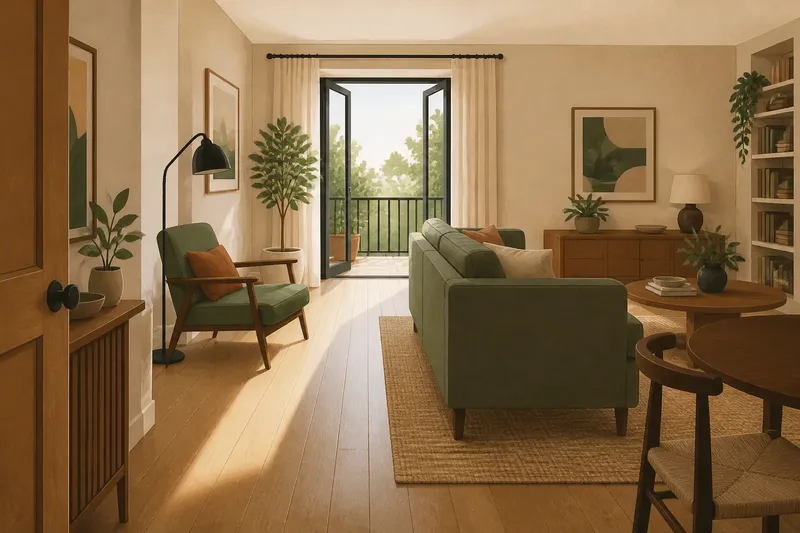
You step into the living room carrying a mug, turn sideways around the sofa, then weave past a chair to reach the window. Nothing is dramatically wrong, but the route asks for attention at every turn. A clear route through a room can make it feel calmer because your eye and body can read where to go without negotiating the furniture first.
The aim is not to leave a bare strip through the center or line every piece against a wall. It is to notice the paths people already use, then arrange the larger pieces so those paths feel legible. Walk through the room before moving anything. A small adjustment to a sofa or dining chair may resolve a pinch point more effectively than shifting several accessories.
Start with the routes people actually use
Begin at the doorway and name the places you reach during an ordinary day. In a living room, you might go from the entrance to the sofa, from the sofa to a reading chair, or from the seating area to a balcony door. In a bedroom, the practical route may run from the door to the bed and then to the closet. The useful route is the one your household takes, not an imagined line drawn for a floor plan.
Walk each route at a normal pace. Carry something light, such as a book or folded blanket, if that reflects how the room is used. Notice where you slow down, turn your shoulders, pause to let someone pass, or reach around a piece of furniture. Those small adjustments reveal friction that can be easy to overlook when you are standing still.
Check the route from both directions. A path that feels open as you enter may feel awkward on the way back, especially if a chair pulls out or a door swings across it. Also observe what happens when another person is sitting in the room. The goal is a route that remains understandable during everyday use, not just when every chair is empty.
- Start at each doorway people use regularly.
- Walk to the room’s main destinations without changing your usual pace.
- Notice tight turns, forced detours, and places where people stop to make space.
- Repeat the walk while a seated person occupies the room, if practical.
Use the route people follow most often as your first priority.
Read the room from the entrance
Stand just outside the room or at its main entrance. Look toward the far side. Can you tell where the open part of the room continues, or does a chair back, table corner, or sofa arm appear to block the view? You do not need a straight line from door to window. You are looking for a visual clue that helps the room make sense as you enter.
A route can feel obstructed even when there is room to squeeze through. A large piece placed directly in front of the doorway may make the space beyond seem closed off. A narrower piece set slightly to one side can leave a clearer view into the room. This is one reason the position of larger furniture matters: its outline shapes what the eye reads as open floor and what it reads as a barrier.
Look at the furniture’s back as well as its front. The back of a sofa can define a seating area, but if it faces the entrance and sits too close to the door, the room may seem to stop there. If the sofa is pulled farther into the room, a route may open behind it, but the seating area may feel detached. Judge the view and the walk together rather than solving one at the expense of the other.
If the entrance is visually crowded, first move small, movable items out of the immediate view: a basket, loose stool, or stack of bags. Then assess the larger outline. This lets you see whether the real obstruction is the furniture arrangement or simply a cluster of things near the threshold.
Find the pinch points and awkward turns
Pay attention to where one route narrows or changes direction. Common pinch points include the gap between a sofa and coffee table, the space beside a dining chair, and the turn around a bed corner. A route does not need to be equally broad at every point, but a sudden squeeze can make the whole journey feel harder to read.
Ask what causes each pinch. It may be a table placed too close to a seat, a chair angled into the path, or a larger piece that forces a detour. A rug edge can also make a route seem to end in an unexpected place, while a floor lamp or plant may occupy the corner where people naturally turn. Look for the cause before moving things at random.
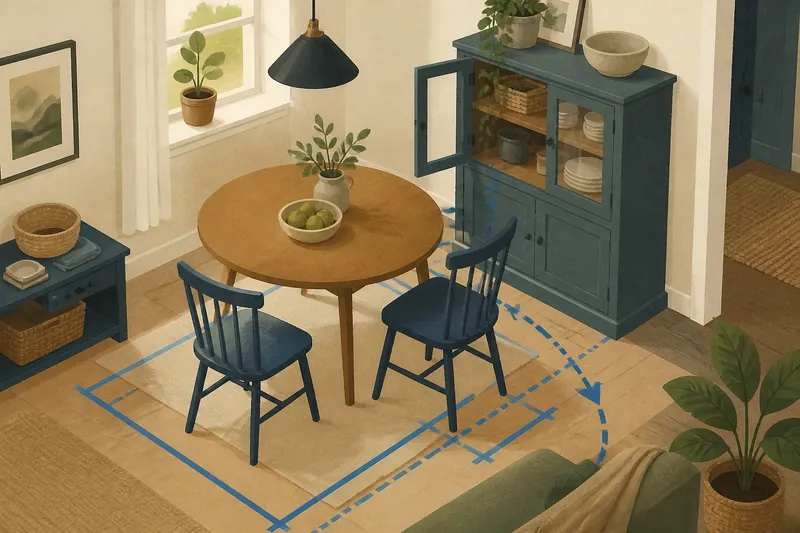
Check the movement of doors and drawers. An open cabinet door, a pulled-out dining chair, or a dresser drawer can temporarily occupy the route. In a shared room, consider the position of a person using the furniture as well as the footprint of the furniture itself. An arrangement that works only when nobody is sitting, reaching, or opening anything may not fit the room’s routine.
Mark problem spots with a removable note or a small piece of painter’s tape placed safely on the floor. Mark only the troublesome corner or narrow passage, not an idealized route across the room. The marks help you keep track of what you want to improve while you try a change.
Shift the largest pieces before the small ones
Once you know the route that needs help, consider the largest pieces that shape it. Sofas, beds, dining tables, bookcases, and substantial cabinets influence both the open floor and the view from the entrance. Start with the piece that creates the clearest obstruction or awkward turn. Leave lamps, cushions, and decorative objects alone until you know whether the main layout works.
Before moving a heavy or awkward item, check the floor, the item’s construction, and a safe way to handle it. Get help when needed. Do not attempt to move anything that may be attached to a wall or otherwise unsafe to shift; follow the maker’s guidance or consult a qualified professional when the situation calls for it.
Try one change at a time. Turn a chair so its front faces the seating area rather than the route. Move a coffee table closer to the group if it is making people detour around its outer edge. If a sofa divides the entrance from the rest of the room, shift or angle it enough to open a clearer view while keeping the seating area usable. Take a fresh walk after each adjustment.
Imagine a living room where the route from the door to the balcony bends around a sofa arm and a chair angled into the passage. You turn the chair toward the sofa, then slide the sofa slightly away from the doorway. The expected visible result is a more open view toward the balcony and a turn that no longer requires stepping around the chair. If the seating now feels disconnected, restore part of the sofa’s original position and test again.
Do not assume the center of the room must remain empty. A table can sit near the center if people can move around it naturally. What matters is whether furniture edges help the route read clearly, rather than making every journey feel like a slalom.
Refine the route without making the room feel bare
After the large pieces are in a better position, restore the smaller items selectively. Keep objects that support the room’s use, such as a basket for blankets or a lamp beside a reading seat, but avoid placing them where people turn or pass. A plant may soften an empty corner; if its leaves spill into a walkway, move it to a spot where it can be seen without being dodged.
Use the edges of rugs and furniture to make the route easier to understand. A rug that sits under the seating group can help distinguish that area from a path along its side. A runner may suggest a direction in a long space, though it should not force people into a route they do not naturally take. Treat these cues as support, not as substitutes for usable floor space.
Lighting can help people read a route after dark. Check whether a doorway, turn, or change in floor level becomes hard to see when the room is lit for evening. A lamp may improve visibility, but keep cords out of the walking path and use fixtures as directed. If the room has a dim area, consider a suitable light source rather than relying on someone to remember to step around it.
Make a final pass with the room in its normal state. Put the everyday chair back where it belongs, leave the usual basket in place, and open doors or drawers people commonly use. Walk the main routes again. If you still pause at the same corner, the arrangement may need another small adjustment.
What should you check before settling on a layout?
Should every route run in a straight line?
No. A gentle turn can work well if the opening and destination are easy to see. The problem is an unnecessary detour around furniture that interrupts an otherwise natural journey.
Should the largest pieces always sit against the walls?
No. A sofa or table can sit away from a wall when it helps organize the room and leaves comfortable movement around it. Judge its position by the entrance view, the route people use, and the way the room functions when occupied.
What if a narrow passage cannot be widened?
Keep the passage as clear and visually simple as you can, and avoid adding objects at the tightest point. If the constraint comes from a fixed feature, arrange nearby furniture to make the turn into and out of that passage more direct.
How can you tell whether a change helped?
Walk the route again from both directions and notice whether you still slow down, turn sideways, or reach around furniture. Also check that the destination remains comfortable to use; a clearer path is not an improvement if it makes the sofa, bed, or table difficult to approach.
Keep the clearest route in everyday use
Room layouts shift as habits change. A new work bag may collect by the door, a chair may drift toward the window, or a laundry basket may take over a useful corner. When a familiar route starts to feel awkward again, walk it before rearranging the whole room. The obstruction may be a temporary object rather than a furniture problem.
Keep the main search question practical: can you move from the entrance to the places you use without repeatedly adjusting your path? A clear route through a room does not require a perfect floor plan or an empty interior. It comes from noticing the ordinary walk, giving larger pieces a deliberate position, and leaving the places where people turn and pass free of avoidable obstacles.
Before you finish, return the furniture to the arrangement you intend to keep and make one last everyday walk with your hands occupied. If the route still reads easily, leave the rest of the room alone; not every open patch needs filling, and not every corner needs correcting.